
Every Moroccan child deserves to know their language.
Your child may speak English, French, German, Dutch, or another language confidently. They may learn differently, communicate differently, or need more support. That should never mean being disconnected from Moroccan Darija or Arabic Fusha.
At Darija Academy, we adapt the lesson to the learner — not the learner to the lesson.
Learning that fits your kid, not the other way around.
Special Needs Online Classes for Kids & Teens
- 🎥Live classes, 1:1 tutoring, and self-paced options
- 🏅Vetted and passionate teachers
- 🚀Build skills, confidence, and a genuine love of learning

Different ways of learning. The same right to belong.
Children, teenagers, and adults with disabilities, neurodivergence, learning difficulties, or communication differences deserve access to their Moroccan heritage language just like everyone else.
Why families may struggle to find the right class
For Moroccan families living abroad — including mixed families and single parents — finding the right language teacher can be surprisingly difficult.
English is strong. Darija isn’t.
A child may grow up speaking English with one parent and have little opportunity to develop Moroccan Darija with the other side of the family.
They need Moroccan Arabic.
Many Arabic programs focus on Fusha or other dialects. Your family may need the language actually spoken by parents, grandparents, and relatives in Morocco.
Traditional classes may not fit.
Long lessons, fast instructions, large groups, heavy reading, or unpredictable routines can create barriers for some learners.
Communication can look different.
Some learners communicate through speech, while others communicate through gestures, pictures, signs, or by pointing and choosing.
Parents want connection.
The goal may be simple and deeply meaningful: “I want my child to understand and speak with their Moroccan grandparents.”
Adults deserve this too.
Inclusive language education is not only for children. Teenagers and adults also deserve the opportunity to learn Darija and Fusha at their own pace.
Two languages. One Moroccan connection.
Darija and Fusha serve different purposes. We build the learning journey around your family’s real goals.
Moroccan Darija
For everyday communication, family connection, and Moroccan life.
- Greetings and family conversations
- Needs, choices and requests
- Food, home and daily routines
- Feelings and practical communication
- Speaking with Moroccan parents and grandparents
- Moroccan culture and everyday expressions
📖 Arabic Fusha
For learners who want to develop formal Arabic alongside their Moroccan language.
- Listening and vocabulary
- Arabic letters and literacy
- Reading and writing at an appropriate pace
- Simple sentence building
- Arabic comprehension
- Personalized progression rather than pressure
We can adapt the learning experience.
Support needs are individual. A diagnosis does not tell us exactly how someone learns. We begin with the person — and Sabira adapts her tools and approach to fit them.
Our learning approach
We use a simple, practical sequence to help language move from recognition to meaningful communication.
SEE
Picture, object, action or visual cue.
HEAR
Hear a clear Darija or Fusha model.
CHOOSE
Identify meaning with supported choices.
COMMUNICATE
Speak, point, gesture, sing or act it out.
USE
Apply the phrase in a real family situation.
REPEAT
Review naturally through songs, games and daily life.

Every child has the right to discover everything.
Kids with special needs can learn, grow, and thrive online just like any other child. With the right teacher, the right pace, and the right encouragement, technology becomes a doorway — not a barrier — to real progress, confidence, and joy in learning.
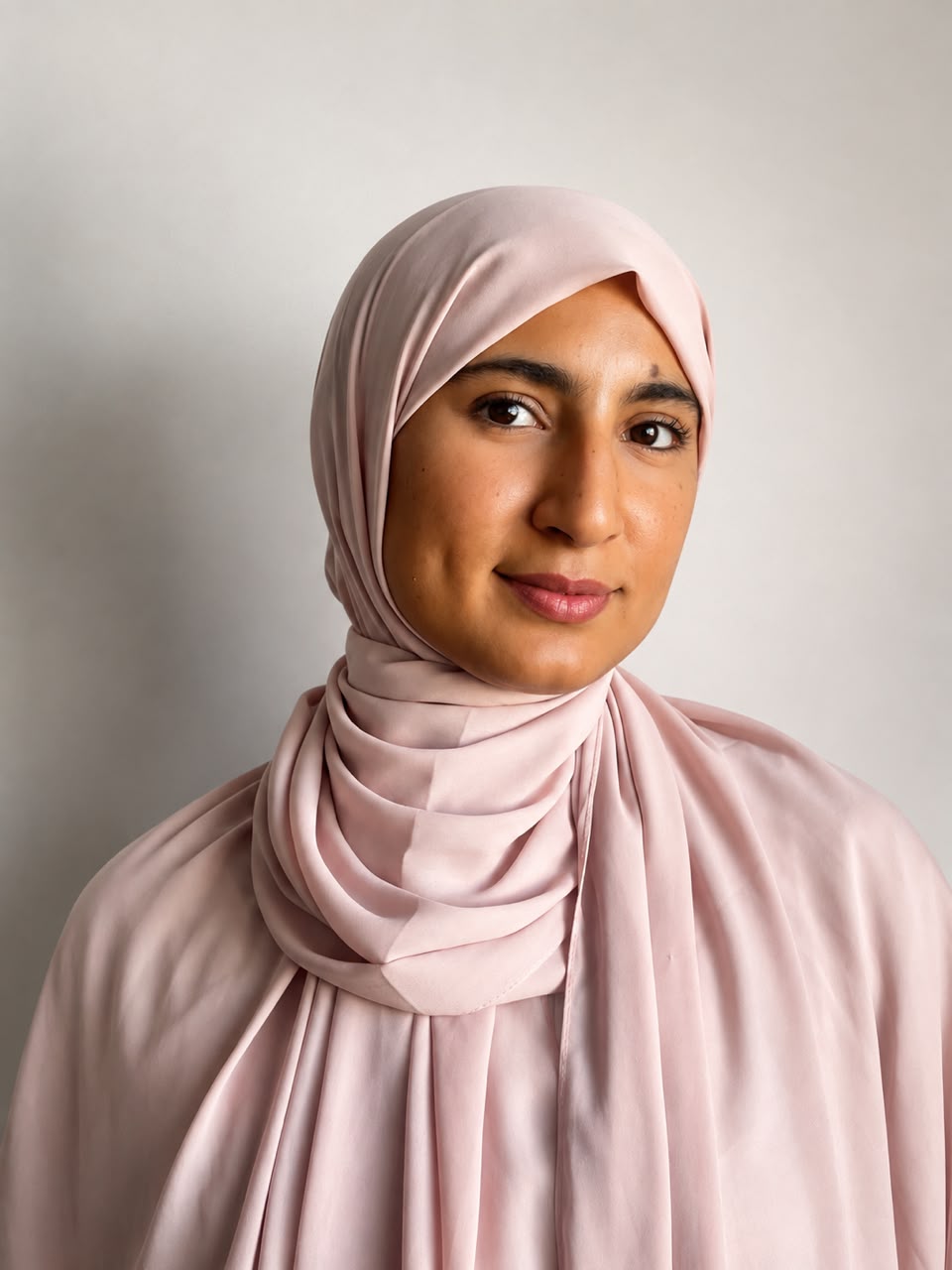
Sabira S.
Head of Inclusive Learning at Darija Academy
Arabic: Native
English: Good
TESOL certification
Monday–Sunday availability
Online Classes Worldwide
Experience that starts with the child.
Sabira brings experience across multiple settings supporting learners with individualized needs: as a Shadow Teacher at the American Academy of Casablanca, at an International School for Special Needs, and through her ongoing work with Darija Academy, teaching both online and in person. Across each setting, she has worked alongside teachers and parents to support students with individualized learning needs.
She has also worked in an international school with mixed classrooms — supporting children of mixed families and children who had just moved to Morocco from abroad and were learning Darija for the first time — as well as with an international school for children with special needs.
- Supported students with individualized learning needs.
- Worked with mixed and internationally-relocated children learning Darija.
- Experience in a school setting for children with special needs.
- Assisted teachers with classroom management.
- Encouraged participation and engagement.
- Collaborated with teachers and parents.
- Uses creativity, songs and arts to encourage learning.
- Bring patience, adaptability, and problem-solving to lessons.
What happens before the first learning plan?
We want to understand the learner before deciding how to teach them.
What we want your learner to be able to do
Progress is not only about memorizing vocabulary. We care about meaningful communication.
💬 Communicate
Request, refuse, choose, greet, ask for help, express a feeling, or communicate a need.
👵 Connect
Build meaningful moments with Moroccan parents, grandparents, relatives and family friends.
Belong
Participate in Moroccan family life and develop a stronger relationship with heritage and identity.
📖 Learn
Develop Darija and/or Fusha according to the learner’s age, abilities, goals and interests.
🌱 Grow
Move gradually from supported responses toward greater independence and confidence.
❤️ Enjoy
Experience language learning as a safe, encouraging activity rather than a constant test.
Questions Moroccan parents may have
Whether you are a single parent, part of a mixed family, or navigating this alone for the first time — these are the questions we hear most.
Can my autistic child learn Moroccan Darija?
Yes. Autism does not automatically mean a child cannot learn more than one language. We look at the child’s individual communication, learning preferences, processing time and goals rather than assuming one method works for every autistic learner.
Will Darija confuse a child who already speaks English, French, German or Dutch?
No. Learning another language does not mean a child should stop using their strongest language. We use that language as a bridge while gradually introducing meaningful Moroccan Darija.
Does my child need to speak to participate?
No. Depending on the learner, participation can include speech, pointing, pictures, gestures, hand signs, songs, games, or simply choosing between options that Sabira presents.
My child doesn’t use words at all. Can Sabira still teach them?
Yes. Sabira uses hand gestures, facial expressions, music, songs, videos and games to connect with learners who communicate without spoken words. The goal is always meaningful participation, in whatever way suits the learner.
Can my child learn Darija and Fusha together?
Yes. The two can be taught as separate but complementary pathways, depending on the learner’s goals and capacity. Darija can focus on everyday Moroccan family communication while Fusha can focus more on formal Arabic and literacy.
Can teenagers and adults join?
Yes. Inclusive language learning is not only for young children. Teenagers and adults can learn Darija and Fusha with age-respectful materials and goals relevant to their lives.
Can a parent stay during the lesson?
Yes. Depending on the learner, a parent can attend independently, stay nearby for support, or participate actively.
I am a single parent and don’t speak Darija myself. Can you still help my child connect with their Moroccan family?
Yes, this is one of the most common reasons families come to us. Sabira works directly with your child, and we are happy to guide you as a parent on simple ways to support what they’re learning at home, even if you don’t speak Darija yourself.
My child’s other parent is Moroccan but we are separated. Can I still book lessons on my own?
Yes. Either parent or guardian can book and be involved in lessons. We focus on what is best for the learner and are respectful and flexible with each family’s situation.
We are not Muslim, or our family follows a different faith. Is this still for us?
Yes. Darija Academy welcomes all Moroccan and Moroccan-heritage families regardless of religion. Our Darija lessons focus on language and culture; our Quran and Fusha lessons are optional and separate paths for those who want them.
My child was adopted and has no prior connection to Darija. Can they still start?
Yes. Many learners begin with no prior exposure to Darija at all. Lessons are built around wherever the learner is starting from, whether that is their first word or a stronger existing base.
How many siblings can join one lesson?
Lessons are typically one-to-one so that pacing and support can be fully personalized, but please contact us if you would like to ask about siblings learning together.
What if my child has a difficult day and cannot focus during a lesson?
That is completely normal and expected. Sabira adjusts pacing, activities and expectations in the moment. A shorter, calmer session is always better than pushing through a difficult day.
Can you work around a specific routine or sensory need?
Yes. Please share these details with us before the first lesson so Sabira can plan around them from day one, such as preferred timing, sensory considerations, or communication preferences.
Do you offer a trial lesson before committing?
Yes, we recommend starting with an initial conversation and a first lesson so you and your child can meet Sabira and see how she works before deciding on an ongoing plan. Please email or WhatsApp us to arrange this.
How much does this cost?
Every learner’s plan is personalized, so pricing depends on the learner’s needs and lesson format. Please email us at Support@darijaacademy.com or send us a WhatsApp message and we will be happy to discuss the right plan and pricing for your family.
How do I book a lesson or ask a question first?
You can email us at Support@darijaacademy.com or send a WhatsApp message to +43 67 060 78 060. We are available Monday to Sunday and will get back to you to discuss your child or family member’s needs.
What if lessons need to be rescheduled?
We understand that routines can be unpredictable, especially for families managing additional needs. Please message us as early as possible and we will do our best to find a time that works.
Are these lessons therapy?
No. Darija Academy provides language education. Our lessons do not replace speech-language therapy, occupational therapy, medical care, psychological support or special education services.
How will I know if my child is making progress?
Sabira shares updates with parents on what was practiced and how the learner responded, so you can see progress in real, meaningful terms rather than just test scores.
What families are saying
“My son is autistic and I was nervous he wouldn’t sit through a lesson. Sabira used his favorite cartoon characters to teach him greetings and he actually asked for a second lesson.”
“We are a mixed family and I don’t speak Darija myself. Sabira worked directly with my daughter and even gave me simple phrases to practice with her at home. It’s been wonderful for both of us.”
“As a single parent doing this alone, I appreciated how flexible and understanding the scheduling was. My son has ADHD and some days are harder than others — Sabira always adapts without making him feel behind.”
“My daughter has Down syndrome and mostly communicates through gestures and pictures. Sabira learned her cues within the first lesson and used songs to keep her engaged the whole time.”
“We tried two other tutors before Darija Academy and both moved too fast. Sabira took the time to understand how my son learns before starting any real lessons. Huge difference.”
“My teenager is non-verbal and I honestly didn’t think online lessons would work. Sabira uses videos, hand gestures and games and he lights up every session.”
“Being able to email first and just ask questions before committing made this so much less stressful. No pressure, no pricing tables to decipher — just a real conversation about my daughter’s needs.”
“My son moved to Morocco from abroad and felt disconnected from Darija completely. Sabira’s experience with kids in exactly that situation showed immediately — he’s speaking full sentences now.”
“My daughter has a hearing difference and I worried online lessons wouldn’t work at all. Sabira used visuals and written key words consistently and it’s honestly exceeded what I expected.”
Your child’s Moroccan language journey can start here.
Tell us how your child, teenager, or adult family member communicates and learns best. We will listen first, then build the learning experience around the learner.
Email our team Message us on WhatsApp